The Iowa total loss threshold is 70% of a vehicle’s fair market value before it was damaged. That number decides one thing, and it is not the thing most people think. It decides whether the state brands your title. It does not decide whether your insurer totals your car. Iowa Code 321.52 sits in the motor vehicle code, and what it actually does is tell county treasurers when a salvage certificate of title has to be issued. Your carrier can write off a hail car well under 70%, or repair one above it.
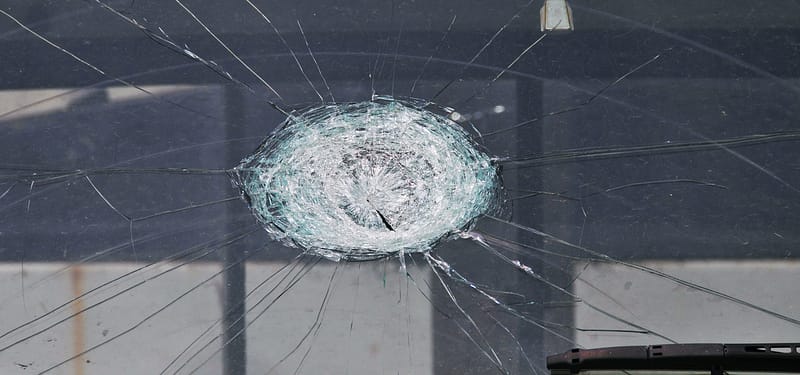
That distinction matters right now. On August 7, 2026 the National Weather Service logged 19 hail reports across Iowa, 8 of them at golf ball size or bigger and 2 at two and a half inches or more, with the largest stone reported at 4.5 inches. The same day brought 38 damaging wind reports, a peak reported gust of 98 mph, and 3 tornado reports. The heaviest concentration ran through Linn, Black Hawk and Cerro Gordo counties, which is Cedar Rapids, the Waterloo area and Mason City. Softball sized hail does not dent a car. It writes it off.
_(Limon,_eastern_Colorado,_USA)_3.jpg "ia-hail-inline")
What the Iowa total loss threshold actually triggers
Iowa Code 321.52(4)(e) defines a “wrecked or salvage vehicle” as a damaged vehicle “for which the cost of repair exceeds seventy percent of the fair market value of the vehicle, as determined in accordance with rules adopted by the department, before the vehicle became damaged.” The department’s own rule adds a floor that gets left out of most summaries: the car has to have been worth $500 or more before the damage (761-405.2(1)). Cross that line and a salvage title has to be issued. That is the whole consequence. It is a titling rule, not a claims rule.
The 70% is also newer than most of the internet realizes. Iowa ran at 50% until July 1, 2021, when the legislature raised it. You can see the changeover preserved in the rules: the DOT still keeps a “damage over 50 percent” title designation on the books, and 761-405.7(1)(c) says it applies only to transfers and title issuances occurring before that date. Several pages ranking for this question today still print 50%, and at least one well known consumer finance site describes it as repairs plus salvage value reaching half of actual cash value, which is a different formula entirely and is not what the Iowa statute says.
How is that fair market value set? Rule 761-405.2(2) lists exactly three acceptable sources: a bill of sale, an appraisal conducted by a motor vehicle dealer or a third-party appraiser, or a commercially available pricing guide. An independent appraisal is on that list by name.
If you hand the car over, the percentage stops mattering
Here is the part almost nobody covers, and it changes the answer for most hail claimants. Iowa Code 321.52(4)(b) says a vehicle whose ownership “has transferred to an insurer of the vehicle as a result of a settlement with the owner of the vehicle arising out of damage to, or unrecovered theft of, the vehicle shall be deemed to be a wrecked or salvage vehicle.”
Deemed. There is no percentage test in that sentence. If you accept a total loss settlement and sign the title over, the car becomes salvage in Iowa whether the repair estimate came to 80% of its value or 30%. The insurer then has 30 days from the date the title is assigned to obtain the salvage certificate of title. So if you are taking the payout and walking away, the 70% figure you have been reading about does not apply to your car at all. It applies to the other situation, which is when you keep it.
The $3,000 certification, and why a totaled car can come back clean
Normally an Iowa title never forgets. Rule 761-405.7(1) says the designations are carried forward to every subsequent Iowa title and registration receipt issued for that vehicle, and converting a salvage title back to a regular one usually stamps it “REBUILT-IA” (761-405.4(1)).
There is one exit. Iowa Code 321.52(4)(c) says that where the car reached the insurer through a damage or unrecovered theft settlement, and the insurer certifies to the county treasurer that it holds one or more written estimates stating that the retail cost of repairs for all damage, including labor, parts and other materials, is less than $3,000, the treasurer issues the regular title and registration receipt with no designation. Rule 761-405.4(2) sets out what that certification has to contain, and adds that it is not transferable if the insurer assigns the salvage title to someone else.
Read that carefully, because the clean title goes to the insurance company, not to you. It is the mechanism by which a car an insurer declared a total loss can reappear on the Iowa used market with nothing on its paperwork to say so. Under $3,000 of repairs is not much on a modern car with a big windshield and a panoramic roof, but on older vehicles and lighter hail it happens.
What Iowa does regulate is how your number gets built
The statute is silent on when a carrier must total a car. The Iowa Insurance Division is not silent on how the carrier has to arrive at the money. Rule 191-15.43 governs first-party auto total loss settlements, and it is the most useful document in this whole area for someone staring at an offer.
A cash settlement has to be based on the actual cost of buying a comparable car, and the comparables have to be two or more vehicles that are available, or were available within the last 90 days, to consumers in the local market area. Only if there is nothing local can the insurer reach into proximate areas and the closest major metropolitan areas, in state or out. Taxes, license fees and the other fees incident to transferring ownership are included in that cost and are the insurer’s to pay, not yours.
Then the deductions. Rule 15.43(1)(b) requires that any deduction, including one for salvage, “must be measurable, discernible, itemized and specified as to dollar amount and shall be appropriate in amount.” Subrule 15.43(6) says that where the amount is cut for betterment or depreciation, all the information behind it has to be in the claim file. And 15.43(9) is the sharpest of them: “Betterment deductions are allowable only if the deductions reflect a measurable decrease in market value attributable to the poorer condition of, or prior damage to, the vehicle.”
This is where hail claims are won and lost, and it helps to know what you are looking at. A CCC valuation report carries two different condition deductions that read like one idea. The uniform condition adjustment is a flat amount taken off every comparable to bring dealer advertised prices down to normal wear. It says nothing about your car, courts have upheld it, and arguing about it goes nowhere. The component condition adjustment is the only line on the page that describes your actual vehicle, and it can be positive. On the reports that come across our desks it is almost always zero. A zero there does not mean your car was assessed as average. It means no finding was recorded. On a well kept car that line should be moving in your favour, and “we applied the standard adjustment” is not a measurable decrease in market value attributable to poorer condition.
The 35 day clock, and the VIN that decides whether it runs
Rule 15.43(1)(a)(3) gives Iowa policyholders something most never hear about. If you notify the insurer within 35 days of receiving the claim draft that you cannot actually buy a comparable vehicle for that money, you have a right of recourse, and the insurer has to reopen the claim file. It then has to do one of four things: locate a comparable vehicle for you at its own figure through a licensed dealer, pay you the difference between its valuation and the cost of the comparable you found, offer you a replacement vehicle, or conclude the loss through the appraisal clause in your policy.
There is one carve-out, and it is worth checking your paperwork for. The insurer does not have to reopen anything if, at the time of settlement, its documentation already gave you written notice of a specific comparable vehicle of the same manufacturer, same or newer year, similar body style and options, in as good or better condition, that could have been bought for its figure. The rule requires that notice to include the vehicle identification number. So look for a VIN on your settlement documents. If there is not one, that 35 day route is open to you.
If you keep the car
Retaining a hail damaged vehicle after a total loss puts you back on the 70% side of the line, and the title consequences become yours to manage. Getting a salvage titled car legally back on the road needs a salvage theft examination by a peace officer specially certified by the Iowa Law Enforcement Academy, under Iowa Code 321.52(4)(d).
Two details catch hail owners in particular. First, rule 761-405.8 says the vehicle is not to be examined until it has been completely repaired, except for minor body parts such as trim, body marking or paint. You cannot turn up for inspection with the dents still in the roof. Second, the examination is a theft check, not a safety inspection, and the statute says a passed certificate must not be read by any court as certifying the car is safe to drive. You must attend in person with the salvage title, the repair affidavit and bills of sale for every essential part replaced. You can get a permit to drive the car to and from the examination by filing that affidavit. Iowa Code 321.52(4)(d) sets the fee at $50, due when you schedule, and rule 761-405.8(1)(c) adds that if the examination is not completed within three years of the affidavit and payment, a fresh fee falls due. Pass, and the regular title comes back marked “REBUILT-IA” for good.
One more thing if you plan to sell later. Iowa Code 321.69 requires a damage disclosure statement from the seller on transfer, stating whether they know the vehicle was damaged past the 321.52(4)(e) threshold, and knowingly making a false one is a fraudulent practice. That requirement does not apply to vehicles more than seven model years old. Any designation already on the title still carries forward regardless.
Where this leaves you
None of this tells you what your particular car is worth, and none of it is legal advice. What it does is tell you where to look. If the offer feels light, the questions worth asking are whether the comparables were genuinely local and genuinely recent, whether every deduction on the sheet is itemized in dollars with something behind it in the claim file, and whether anyone wrote a VIN on your settlement paperwork. If you are working through an offer on a hail damaged vehicle, our Iowa total loss appraisers page covers how an independent appraisal fits into a claim here, and it is worth remembering that Iowa’s own rules name a third-party appraisal as one of three ways fair market value can be established. For the condition lines specifically, Total Loss Condition Adjustment: Where to Push Back goes further into which of the two deductions is worth your energy. And if you have already decided the number is wrong, What to Do If You Disagree with Your Total Loss Settlement walks through the appraisal clause that the 35 day rule can send you to.