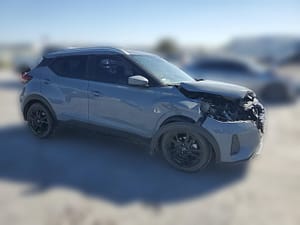

Virginia has no 75 percent rule that forces an insurer to write your car off. Nearly every page ranking for the Virginia total loss threshold says otherwise. The number is real and it does appear in the Code, but it governs narrower situations: recovered stolen vehicles, and the DMV paperwork that follows when you keep a badly damaged car. For a vehicle wrecked in a crash or a storm, Va. Code § 46.2-1600 applies a different test, and your insurer’s estimate can cross it well below 75 percent.

What the Virginia total loss threshold actually is
The definition of a salvage vehicle in § 46.2-1600 gives an ordinary damaged car two triggers, joined by “or”. A late model vehicle is salvage if it has been “acquired by an insurance company as a part of the claims process other than a stolen vehicle”, or if it has been damaged badly enough that the estimated cost of repair “would exceed its actual cash value less its current salvage value”.
Neither one is a percentage. The first is about possession. If the insurer pays you and takes the car, it is a salvage vehicle, and what the repair estimate came to does not enter into it.
The second is a total loss formula. Because salvage value is subtracted from actual cash value, the line always sits below what the car was worth, and it moves with the rebuilder and scrap market instead of staying put. Run the arithmetic on a car with an actual cash value of $18,000. If the salvage bid is $4,000, the statutory line falls at $14,000 of repairs, close to 78 percent. If the bid comes in at $6,000, the line drops to $12,000, about 67 percent. Same car, same dents, different answer. That is why a single percentage is the wrong thing to carry around in your head.
The statute also keeps four costs out of that repair figure: towing, storage, a temporary replacement or rental vehicle, and any payment for diminished value. None of them can be stacked onto the estimate to push a car over the line.
What the 75 percent figure does govern
It appears twice. In § 46.2-1600, a recovered stolen vehicle acquired by an insurer is salvage once repairs exceed 75 percent of actual cash value. And in § 46.2-1603(D), an insurer that has paid a damage claim on a late model vehicle has to notify the DMV when “the estimated cost of repair exceeds 75 percent of actual cash value of the vehicle” and “the vehicle is to be retained by its owner”.
The second is the one most Virginia drivers actually meet, and it is worth being precise about what it does. 75 percent is not the moment your car gets totaled. It is the moment that keeping it starts a title branding process.
One carve-out is written into the same subsection. No notification is required where a supplemental claim was paid for repairs to the engine, transmission, or drive axle assembly, so long as those components were replaced with parts of like kind and quality.
“Late model” covers older cars than you would expect
Every rule above only bites on a late model vehicle, and Virginia defines that term far more broadly than the phrase sounds. It means “the current-year model of a vehicle and the five preceding model years”, or any vehicle whose actual cash value “is determined to have been at least $10,000 prior to being damaged”.
That second half carries no age limit whatsoever. A 2013 pickup that books at $13,000 today is a late model vehicle in Virginia. Owners of older but still valuable trucks and SUVs tend to assume the salvage rules have aged out from under them, and for a lot of those vehicles they have not.
Why this matters after the August 14 hail
Storm reports collected by National Weather Service offices on August 14 logged 13 hail reports across central and southern Virginia, nine of them golf ball size or larger and four at two and a half inches or more, with a 3.5 inch stone measured at Union Mills. Reports came in from Henrico, Albemarle, Hanover, Bedford, Campbell and Henry counties, and the survey comments from that day record dented cars and damaged siding. Fifty-six wind reports were logged alongside them, with gusts to 90 mph. Settlement offers on those claims are landing about now.
Hail totals behave differently from collision totals, and the difference is exactly what that 75 percent notification attaches to. A hail car usually drives. Nothing is bent structurally. The panels are dimpled, the glass may be gone, and the estimate runs enormous because it is pricing individual dents across every horizontal surface. So owners want to keep these cars in a way they almost never do after a serious crash. Keeping it is a genuine option in Virginia, and it is also the choice that puts a brand on the title, which then follows the car through every sale it ever has.
A correction is due here, because the claim circulates. Virginia’s salvage statute draws no distinction between hail and any other cause of damage. The word does not appear anywhere in Chapter 16 of Title 46.2. Hail damage is assessed against the same definition as everything else.
Two things Virginia entitles you to right now
The Bureau of Insurance regulation covering auto claims, 14VAC5-400-80, contains two sentences that are more use mid-claim than most of the statute.
Subsection D: “A total loss valuation shall be provided to the claimant upon request.” That means the valuation report itself, listing the comparable vehicles and every adjustment applied to them, not a letter quoting you a final figure. Ask for it in writing.
Subsection E: where the amount claimed is reduced for betterment or depreciation, all the information behind the reduction has to be in the claim file, and those deductions “shall be itemized and specified as to dollar amount”.
Subsection E is the one that earns its keep, because of how these reports are built. A CCC valuation carries two separate condition deductions that read like a single idea. The uniform condition adjustment comes off every comparable vehicle and says nothing at all about your car. The component condition adjustment is the only figure on the page that describes your vehicle, and on the reports that cross our desks it is almost always zero. A zero there does not mean your car was assessed and found average. It means no finding was recorded against it. If a Virginia settlement has been reduced for condition and no itemized dollar breakdown sits in the claim file, subsection E is the provision that says the file has to show its work.
If your offer arrived after the storm and it does not line up with what the same year, trim and mileage actually sells for around Richmond or Charlottesville, that disagreement gets settled in the valuation report rather than on the phone. Our Virginia total loss appraisers page covers how an independent appraisal works in the Commonwealth. If the number you are arguing about sits on the condition line, total loss condition adjustments goes through what is and is not worth challenging. And if you have already been told the offer is final, what to do if you disagree with a total loss settlement explains the appraisal clause sitting in your own policy.